 FATHERHOOD.ORG
%201.png?width=149&height=82&name=NFI_logo_blue_left%20(1)%201.png)
%201.png?width=119&height=65&name=NFI_logo_blue_left%20(1)%201.png)
%201.png?width=119&height=66&name=NFI_logo_blue_left%20(1)%201.png)
%201.png?width=89&height=49&name=NFI_logo_blue_left%20(1)%201.png)
Father Involvement’s Role in Addiction Recovery: Inside the Fletcher Group’s Fatherhood, Art, and Recovery Pilot Project
5 min read


Across the country, recovery housing programs are helping men overcome substance use disorders and rebuild their lives. But what happens when recovery goes beyond sobriety and addresses men’s role as fathers?
The Fatherhood, Art, and Recovery (FAR) pilot project is answering that question. An innovative partnership between National Fatherhood Initiative®, the Fletcher Group, Inc. (FGI), and National Fatherhood Initiative® partner the Commonwealth Center for Fathers and Families (CCFF), four FGI recovery housing programs are discovering that increasing fathers’ involvement in their children’s lives is a catalyst for creating lasting recovery from addiction.
The Impact of Addiction on Fathers and Families
Substance use disorder (SUD) is a significant public health crisis in the United States. In 2023, an estimated 48.5 million Americans ages 12 and older reported having SUD. The ripple effects extend far beyond the individual.
More than 8 million children under 18 live with at least one adult experiencing SUD, which is more than one in ten children nationwide. In many cases, children experience developmental challenges, family instability, foster care placement, or kinship care. In 2020 alone, the US Census reported that more than 2 million grandparents were living with and responsible for their grandchildren.
FGI is a national nonprofit dedicated to advancing high-quality, person-centered recovery support services. Founded in 2017 by Dr. Ernie Fletcher, the 60th Governor of Kentucky, FGI works with communities and state and local governments to develop holistic, evidence-based recovery housing solutions that provide safe and sustainable support for individuals overcoming substance use disorders.
How Father Involvement Strengthens Recovery
The recovery houses participating in the FAR serve individuals suffering from a variety of SUDS, including alcohol, opioids, stimulants, and other drugs. FAR recognizes that for fathers in active addiction, the damage is often relational as much as physical, including estrangement from children, broken promises, years of lost contact, overwhelming guilt and shame, and deep questions about their worthiness. Many fathers haven’t seen their children in years. Some don’t know where to begin with becoming more involved in their children’s lives. Others aren’t sure they deserve to try. Recovery, in these cases, requires more than a father’s sobriety; it requires rebuilding trust with his family members.
FAR used a three-component approach in helping the recovery houses integrate father involvement:
1. Organization-Level Assessment and Planning
Recovery housing staff completed National Fatherhood Initiative®'s Father Friendly Check-Up™ assessment, received online training, and developed action plans based on assessment findings.
2. Parents in Recovery (PIR) Curriculum
Two peer staff members from each recovery house were trained to facilitate the Parents In Recovery (PIR) curriculum, a 10-session parenting program delivered weekly. Each session lasts for 90 minutes. These staff members were fathers who had completed an addiction recovery program.
3. Father-Centric Strategies
Recovery housing staff identified policy changes and activities that strengthened father-child engagement, shifting the culture from passive acknowledgment of father involvement to intentional support.
Examples of policy changes included adding questions to intake forms about whether a male was a father and whether he had a relationship with his children. If he had a relationship with them, he indicated how often he saw them. If he didn’t have a relationship with them, he indicated how long it had been since he had seen them. Another recovery program turned one of their male houses into a father house where children could visit, creating a family-focused environment.
Examples of activities included family night cookouts at the recovery house, family night movies, a fishing day with fathers and children, turning a room into a game/play room where fathers and their children could gather, and adding a family picnic area.
National Fatherhood Initiative® provided ongoing technical assistance, facilitated webinars, and supported recovery housing staff in building meaningful, actionable plans based on their Father Friendly Check-Up™ assessment results. Bi-monthly technical assistance from FGI and CCFF helped programs implement action plans, facilitate groups, and identify ongoing strategies.
FAR’s Impact
FAR’s impact has been powerful. Across the four participating recovery houses, 44 fathers participated in FAR. Those fathers represented 144 children whose lives were impacted by strengthened father involvement.
The fathers’ stories speak volumes.
One father who had previously had no contact with his young children began using the FAR project’s resources to reconnect with them. Slowly, he began seeing them again.
Another father worked through the court system with support from staff and is now spending weekends with his four-year-old daughter, and building a steady, loving routine with her.
One particularly moving story involved a father who had not spoken to his 16-year-old son in six years. After participating in the FAR parenting groups, gaining fathering confidence, and securing stable housing, his son asked to move in with him! The day before the move, the father called the housing facility staff from a grocery store, unsure what food to buy. Staff put the ball back in his court by encouraging him to get his son’s input. Today, father and son are thriving together.
When father involvement is elevated within recovery housing, it doesn’t just affect the men; it changes the atmosphere of the recovery houses. Staff reported that intentionally increasing father involvement helped create a culture where being an involved father was valued by staff at all levels.
Even the peer support specialists who facilitated the PIR curriculum deepened their sense of purpose as staff and furthered their recovery. According to FGI’s Project Lead Kristin Tiedeman, “The peers we worked with at each house developed tremendously during the project. Many stepped into new leadership roles to help oversee the development of the fatherhood program within their recovery homes. Taking on these responsibilities not only strengthened their leadership skills but also supported their own recovery. As they helped fathers grow in their parenting roles and began reconnecting with their children, they grew as well. Two of the peers we worked with were accepted into a program called the KY Dad Academy, which helps prepare fathers to serve as ambassadors for father engagement across the Commonwealth. One of the peers has started a community fatherhood group for dads in recovery. Being able to give back and contribute to a project with such meaningful impact reinforced their own recovery journeys.”
Challenges and Lessons Learned
Becoming more father-friendly wasn’t without obstacles. Recovery houses faced:
- Limited staff capacity to provide father-specific programming
- Unsupportive family dynamics, such as mothers not supporting the father’s involvement in their children’s lives
- Funding constraints to add father-specific resources
- Scheduling difficulties for PIR groups
Yet even amid these challenges, recovery houses demonstrated that meaningful cultural shifts are possible when leadership commits to elevating father involvement.
The National Fatherhood Initiative® Difference
According to project leaders, National Fatherhood Initiative®'s deep expertise in fatherhood programming and its staff’s consistent, hands-on technical assistance were invaluable to the project's success. Ms. Tiedeman shared, “NFI was with us from the very beginning. Erik Vecere provided technical assistance from project design through the final evaluation phase. His insights were instrumental in helping us understand how to elevate fatherhood within recovery homes. Through the support of NFI and CCFF, we learned that while curriculum plays an important role, the real goal is creating a cultural shift within recovery homes—one that recognizes and supports fathers as an integral part of the recovery process.”
The partnership reinforced a powerful truth: father involvement isn’t separate from recovery. It’s central to it!
Looking Ahead
This pilot helps lay the groundwork for future research and expanded programming.
FGI, CCFF, and National Fatherhood Initiative® plan to continue supporting FGI’s recovery housing programs in elevating increased father involvement. The vision is clear: recovery housing environments where fathers’ involvement in children’s lives is recognized not as an afterthought, but as a vital pathway toward healing.
How does your organization intentionally and proactively integrate increased father involvement to help accomplish its mission?
If you work in an organization that helps men recover from addiction, how do your programs acknowledge the identity of participants as fathers, not just individuals in recovery?
Date Published: 03/24/2026
Last Updated: 08/18/2026
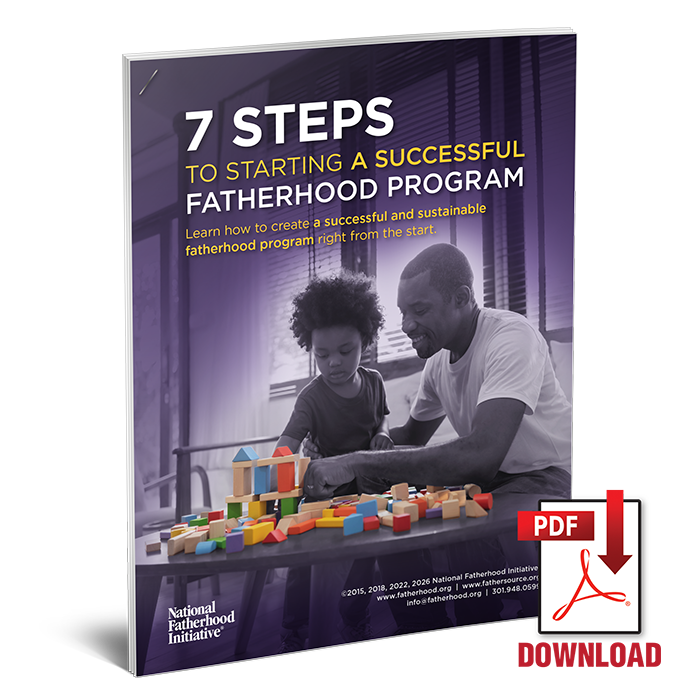
Learn How to Build a Fatherhood Program That Works
Download this free guide for a proven 7-step roadmap—from making the case and securing funding for your program, to launching and measuring real results!

%201%20(1).png?width=148&height=88&name=NFI_logo_blue_left%20(1)%201%20(1).png)


