 FATHERHOOD.ORG
%201.png?width=149&height=82&name=NFI_logo_blue_left%20(1)%201.png)
%201.png?width=119&height=65&name=NFI_logo_blue_left%20(1)%201.png)
%201.png?width=119&height=66&name=NFI_logo_blue_left%20(1)%201.png)
%201.png?width=89&height=49&name=NFI_logo_blue_left%20(1)%201.png)
The 4 Stages of Father Inclusion: A Roadmap for Human Service Organizations
3 min read

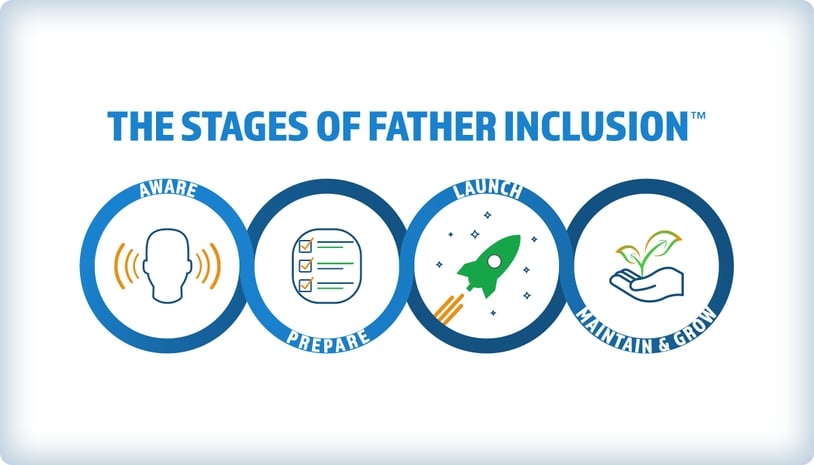
At National Fatherhood Initiative® (NFI), we believe every child deserves the love, guidance, and presence of a committed dad. Yet too often, programs and services—even those designed for families—default to a mother-centric model. That leaves dads overlooked, under-engaged, and under-supported.
That’s why we’ve developed a simple but powerful framework to help organizations move from good intentions to true father inclusion: the Four Stages of Father Inclusion. Each stage comes with free resources to help you master it and progress to the next. Whether you’re just starting to think about engaging dads or already running a fatherhood program, this roadmap can help you take the next step with confidence.
But first, what is father inclusion?
father inclusion (noun)
\ 'fäT͟Hər inˈklo͞oZH(ə) \
Definition of father inclusion
1: the intentional and proactive approach to involving dads in interactions with families.
2: an organization has an environment that welcomes fathers.
3: an organization provides father-specific programs, services, and resources that speak to dads in their unique role as a father.
Now that we have that level set, let’s dive into the stages!
Stage 1: Aware
An organization in this stage may ask: How do we help staff understand the importance of father inclusion?
This is where the journey begins. In the Aware stage, organizations recognize the importance of engaging fathers and start raising awareness among staff, leadership, and partners.
Key actions include:
- Building your own awareness of the impact of father involvement.
- Sharing research, data, and stories with colleagues and leadership that highlight why dads matter.
- Encouraging honest conversations about existing biases, assumptions, or blind spots.
At this stage, small steps—such as using father-friendly language, sharing resources tailored to dads, and asking about dads on intake forms—can begin to shift the culture.
Stage 2: Prepare
An organization in this stage may ask: How do we prepare to launch a fatherhood program or initiative?
Awareness is a start, but preparation is essential. In the Prepare stage, organizations commit to building the capacity needed for meaningful father engagement.
This often looks like:
- Training staff to work effectively with dads.
- Assessing policies and practices through tools like NFI’s Father Friendly Check-Up™.
- Designing programs and services with fathers in mind, not just adapting materials meant for moms.
This stage is about laying the foundation, so your father-inclusive efforts are sustainable, not just symbolic.
Stage 3: Launch
An organization in this stage may ask: How do we launch a successful fatherhood program or initiative?
With awareness and preparation in place, it’s time to act. In the Launch stage, organizations roll out intentional, father-inclusive efforts. These might range from distributing dad-specific brochures to running a full fatherhood program.
Success here depends on:
- Having a recruitment and retention plan.
- Meeting fathers where they are—going out in the community, flexible scheduling, offering incentives, addressing barriers like transportation or legal concerns.
- Listening to dads directly about what motivates them to show up through formal or informal surveys.
Launching isn’t about perfection—it’s about progress and putting father inclusion into practice.
Stage 4: Maintain and Grow
An organization in this stage may ask: How do we ensure our fatherhood initiative stands the test of time?
True impact comes with maintenance and consistency. Launching your program isn't enough. In the Maintain and Grow stage, organizations not only sustain their father-inclusive efforts but also expand them.
That means:
- Securing diverse funding sources to ensure longevity.
- Evaluating your offerings for dads regularly to measure impact and improve as needed.
- Creating new opportunities, like alumni groups, that keep dads connected and engaged.
At this stage, organizations become models for father inclusion, influencing their communities and partners to follow suit.
This may be the last stage, but you’re not done here! You may need to revisit other stages when you bring in new staff, and to measure success.
Why It Matters
While each stage builds on the last, you can start in any stage. No matter where you start, whether you simply become aware or already run established programs, you can always grow. The key is being intentional and proactive in recognizing fathers as essential to child and family well-being and providing resources and programs specifically for them.
When dads are engaged, children thrive. Moms thrive. Communities thrive.
👉 Ready to see where your organization stands? Explore the Father Inclusion Stages at https://www.fatherhood.org/father-inclusion and take the quick quiz to find your starting point.
Date Published: 10/14/2025
Last Updated: 10/14/2025
Learn How to Build a Fatherhood Program That Works
Download this free guide for a proven 7-step roadmap—from making the case and securing funding for your program, to launching and measuring real results!

%201%20(1).png?width=148&height=88&name=NFI_logo_blue_left%20(1)%201%20(1).png)


