 FATHERHOOD.ORG
%201.png?width=149&height=82&name=NFI_logo_blue_left%20(1)%201.png)
%201.png?width=119&height=65&name=NFI_logo_blue_left%20(1)%201.png)
%201.png?width=119&height=66&name=NFI_logo_blue_left%20(1)%201.png)
%201.png?width=89&height=49&name=NFI_logo_blue_left%20(1)%201.png)
Funding A Father-Inclusive Effort For Non-Governmental Organizations
4 min read

Many non-governmental organizations (NGOs) struggle to identify funding sources for fatherhood initiatives and programs. After all, beyond the current federal funding of Responsible Fatherhood grants, implemented in 2006, and a handful of foundations that offered fatherhood-specific grants in the late 1990s and early 2000s, dedicated funding for such efforts has been extremely limited. But that’s not the primary reason for the struggle. It’s the lack of awareness about the many underutilized public and private funding sources that fuel father-inclusive efforts nationwide and can continue doing so. These sources are hidden in plain sight.
This document lists potential sources, starting with public funding at the federal and state levels. This is not an exhaustive list, but it includes the most common sources government agencies have used. Decision-makers in NGOs can monitor federal and state funding from these sources to fund father-inclusive efforts by applying for grants and contracts. Some select examples of how state and local governments have used these sources are included.
Private sources follow, which are ideal for use by NGOs. Combined with potential public sources, decision-makers have more options than many of them realize. This document concludes with a recommended funding approach for starting, scaling, and maintaining father-inclusive efforts.
FEDERAL SOURCES
Core Federal Block Grants (Flexible Use): These are the most widely used sources.
1. Temporary Assistance for Needy Families (TANF)
a. $16.6B annual block grant to states
b. Can fund:
i. Employment programs for noncustodial fathers
ii. Parenting and family stability services
c. Some states dedicate a portion to:
i. Fatherhood programs
ii. Two-parent family initiatives
2. TANF Maintenance of Effort (MOE)
a. Required state spending that can support fatherhood programming
3. Social Services Block Grant (SSBG – Title XX)
a. Flexible funding for family support services
b. Can include parenting, family reunification, and father engagement
4. Community Services Block Grant (CSBG)
a. Funds Community Action Agencies
b. Can support employment, case management, and family strengthening
Child Support & Workforce-Related Funding: These sources are increasingly being used.
1. Child Support Enforcement (CSE) Funds
a. Can fund employment and parenting services for noncustodial parents
b. Federal flexibility allows partnerships with fatherhood programs
2. Access and Visitation (A&V) Mandatory Grants
a. Specifically designed to support noncustodial parents
b. Funds:
i. Parenting time/visitation services
ii. Mediation and conflict resolution
iii. Parenting education
c. Strong alignment with father engagement goals
Family & Child-Focused Federal Programs (Indirect Support): These are not fatherhood-specific but can fund components.
1. Child Care and Development Block Grant (CCDBG)
a. Supports childcare so parents (including fathers) can work
2. Maternal, Infant, and Early Childhood Home Visiting (MIECHV)
a. Funds evidence-based home visiting programs
b. Increasing emphasis on father engagement within home visiting models
c. Can support:
i. Co-parenting education
ii. Father inclusion in early childhood development
3. Community-Based Child Abuse Prevention (CBCAP): Focuses on strengthening families and preventing child maltreatment
a. Can fund:
i. Parenting education
ii. Father engagement strategies
iii. Family support services
4. Child Welfare Funding (Title IV-B & Title IV-E): Supports prevention, reunification, and foster care services
a. Can fund:
i. Father involvement in case planning
ii. Reentry and reunification services
iii. Parenting programs for fathers involved in the system
5. Special Supplemental Nutrition Program for Women, Infants, and Children (WIC): Primarily nutrition-focused, but increasingly used to:
a. Engage fathers in prenatal and early childhood settings
b. Provide education and referrals to family services
Incarcerated and Reentering Fathers Funding
1. The U.S. Department of Justice’s Second Chance Act (SCA) is primarily a reentry funding stream—but many of its allowable uses directly support fatherhood and responsible parenting, especially for incarcerated and reentering fathers.
a. SCA grants fund state, local, tribal, and nonprofit efforts to reduce recidivism and improve reentry outcomes for people leaving incarceration. A key pillar of this work is family strengthening, which creates a natural entry point for fatherhood programming.
b. SCA funds can explicitly support programs centered on fathers, including:
i. Responsible fatherhood & parenting skills
ii. Father-child relationship building
iii. Mentoring and peer support
c. Many standard SCA-funded services stabilize fathers so they can parent effectively:
i. Employment and job training
ii. Housing assistance
iii. Substance use and mental health treatment
iv. Case management and reentry planning
d. SCA includes several program tracks that explicitly support families:
i. Programs for incarcerated parents and their children
ii. Family-based treatment models
e. SCA funding supports services across the full reentry continuum:
i. During incarceration: parenting classes, visitation programs, relationship-building
ii. At release: transition planning that includes family reunification
iii. Post-release: mentoring, employment, and continued parenting support
f. Funds can also be used to improve how systems support fathers:
i. Training correctional staff in family engagement and trauma-informed practices
ii. Developing policies that support safe and meaningful family contact
iii. Building coordinated service systems focused on parents and children
Education Funding Streams
1. Elementary and Secondary Education Act (ESEA) – Title I: Supports schools serving low-income families
a. Can fund:
i. Family engagement initiatives
ii. Father involvement in education
iii. School-based parenting programs
b. Often used for:
i. “Dads in Schools” initiatives
ii. Literacy and engagement events involving fathers
STATE SOURCES
State agencies have combined federal funds with state funds to support father-inclusive efforts.
1. State General Funds
a. Direct appropriations through:
i. Departments of Human Services
ii. Departments of Children & Families
iii. Departments of Education
iv. Departments of Public Health
b. Used to:
i. Match federal funds
ii. Sustain programs between grant cycles
2. Child Support Incentive Funds (State Use)
a. Performance-based (not operational) federal funds retained by states
b. Can be reinvested in:
i. Employment programs
ii. Father engagement services
3. State Workforce & Reentry Funding
a. State workforce agencies and corrections departments often fund:
i. Job readiness for fathers
ii. Reentry fatherhood programs
b. Frequently braided with TANF or CSE funds
4. State-Specific Fatherhood Initiatives
a. Some states create dedicated initiatives (e.g., statewide fatherhood programs)
b. Typically funded through:
i. TANF transfers
ii. State appropriations
iii. Public-private partnerships
Be sure to download the full guide here to learn more and share with leadership to fund your fatherhood work!
Date Published: 06/09/2026
Last Updated: 06/09/2026
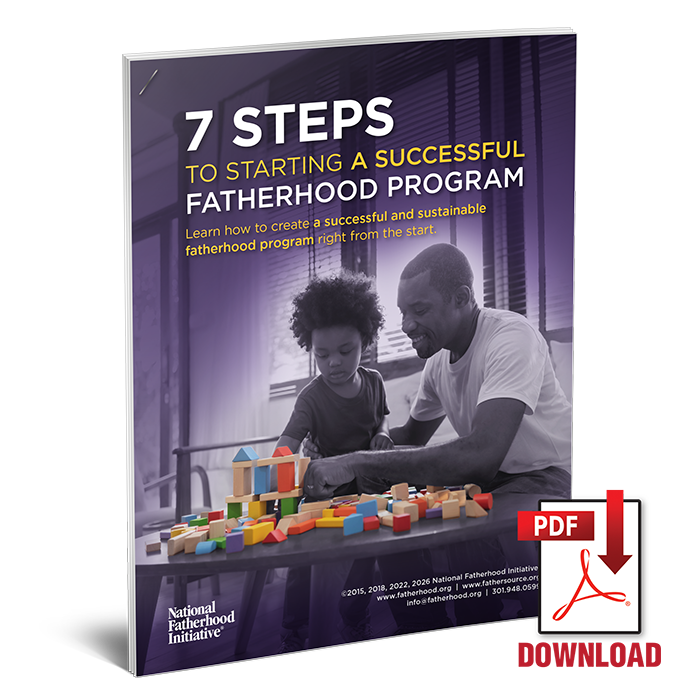
Learn How to Build a Fatherhood Program That Works
Download this free guide for a proven 7-step roadmap—from making the case and securing funding for your program, to launching and measuring real results!

%201%20(1).png?width=148&height=88&name=NFI_logo_blue_left%20(1)%201%20(1).png)


