 FATHERHOOD.ORG
%201.png?width=149&height=82&name=NFI_logo_blue_left%20(1)%201.png)
%201.png?width=119&height=65&name=NFI_logo_blue_left%20(1)%201.png)
%201.png?width=119&height=66&name=NFI_logo_blue_left%20(1)%201.png)
%201.png?width=89&height=49&name=NFI_logo_blue_left%20(1)%201.png)
Is Your Organization Really Father Inclusive? Five Assumptions Worth Challenging
4 min read


Many human service organizations proudly say they’re “family-centered.” But in practice, what that often means is mom-centered.
The truth? Father inclusion isn’t just about inviting dads to the table—it’s about challenging the unspoken assumptions that keep them out of the room.
Here are five common assumptions worth re-examining, along with practical ways to replace them with father-inclusive thinking and action.
Assumption 1: “We serve families; therefore, we serve dads.”
Father inclusion doesn’t happen by default; it happens by design. Examine whether you’re more intentional than proactive in serving dads. For example, if your program materials, conversations, and spaces focus primarily on moms, dads may not think you serve them.
Challenge it by asking:
- Do our brochures, website, and forms include dads or only moms?
- Do we collect information about dads at client intake, even when they don’t live in the home?
- Does our use of the word “parent” lean toward “mom” or do we truly mean both parents?
Try this:
- Use father-specific language and images that include dads in outreach materials, such as brochures and program flyers. Some examples include:
- “Calling all dads, stepdads, and father figures. Your role matters!”
- “Dads play a powerful role in helping children thrive. Join us to strengthen that bond.”
- “Strong dads raise strong kids.”
- “Take part in our 24:7 Dad® sessions to build your fathering skills and confidence.”
- “Our programs welcome dads, granddads, uncles, and other father figures.”
- Highlight stories of dads engaged in your programs and services on your social media and on your website.
- Ensure the descriptions of every program or service for parents answer a simple question: Would a dad see this as a program (or service) for him?
Assumption 2: “Moms are easier to engage.”
Indeed, moms often have more frequent contact with human service organizations, such as schools, healthcare, and social programs. But labeling dads as “hard to engage” can become a self-fulfilling prophecy. The issue isn’t that dads are hard to engage—it’s that many programs haven’t used tactics to engage them.
Challenge it by asking:
- Do we ask dads how they’d like to be engaged?
- Are our hours, tone, and approach dad-friendly, such as serving working dads in the evening or on weekends?
- Do we unintentionally signal that dads aren’t worth engaging?
Try this:
- Offer flexible scheduling and personalized outreach for recruitment and retention, such as text messages, brief calls, or mailing hand-written postcards.
- Meet dads where they are, such as barbershops, workplaces, recreation centers, or online communities.
Assumption 3: “If a dad isn’t in the home, he’s not involved.”
Many nonresident dads remain deeply connected to their children financially, emotionally, and physically through frequent visits. Yet organizations often overlook them simply because their addresses don’t match their children’s.
Challenge it by asking:
- Do our policies and forms exclude dads who live apart from their children?
- Do we communicate with both parents or only with the custodial one?
- Do we unintentionally support the custodial parent at the expense of the nonresident parent?
Try this:
- Ensure that you collect both parents’ information at client intake.
- Offer guidance on positive co-parenting, such as respectful communication between co-parents.
Assumption 4: “Dads in crisis are too difficult to work with.”
Some dads struggle with employment instability, substance use, trauma, or the justice system. But labeling them as “too difficult” can block opportunities for them to overcome their struggles. Dads facing challenges often respond powerfully to staff who first see their strengths.
Challenge it by asking:
- Do we define dads by their problems or their potential?
- Do we train staff on trauma-informed and father-inclusive approaches?
- Do we help dads accept responsibility for their poor choices through an empathetic lens?
Try this:
- Approach struggling dads with curiosity, not judgment. Ask, “What matters most to you about being a dad right now?” This question connects to their identity and motivation, two critical factors in recruiting and retaining dads in your programs and services.
- Connect fathers to practical supports like job readiness or peer mentoring, and you’ll see father engagement in your programs and services rise.
Assumption 5: “Father inclusion is someone else’s job.”
Father inclusion isn’t the responsibility of a single staff member or an organizational area. It’s an organizational mindset that says every staff member and area of the organization is expected to engage fathers.
Challenge it by asking:
- Who owns father inclusion in our organization, and who else should also own it?
- Do supervisors model father-inclusive language and expectations?
- Is father inclusion built into our data tracking, evaluation, and staff training?
Try this:
- Create a small cross-department “Father Inclusion Team” to review materials, space design, and program and service content to ensure dads feel welcome.
- Conduct short staff reflections during staff meetings. Ask questions like, “How did we engage dads this week?”
- Celebrate small wins, such as a dad attending his first appointment or fatherhood group or completing a feedback survey.
Building a Father-Inclusive Future
Challenging assumptions isn’t easy. It takes reflection, humility, and teamwork. But when your organization starts shifting to a more father-inclusive mindset, powerful things happen:
- Dads engage more fully, bringing new energy and insight.
- Moms feel more supported, not burdened with all parenting responsibilities.
- Children thrive, benefiting from stronger relationships with both parents.
- Staff feel re-energized, seeing that they’re taking a true family-centered approach that can increase positive family outcomes.
Becoming truly father inclusive isn’t about changing your mission. It’s about proactively ensuring that engaging dads is essential to accomplishing your mission. Because every time a dad walks into your facility and feels, “They see me here,” you’ve changed more than one life—you’ve changed your organizational culture.
Which of the five assumptions resonated the most with you or challenged your current perspective the most?
What’s one small change your organization could make this month to signal that dads are essential to accomplishing your mission?
Learn how to make your organization more father inclusive by learning about The Stages of Father Inclusion™.
Date Published: 11/25/2025
Last Updated: 11/25/2025
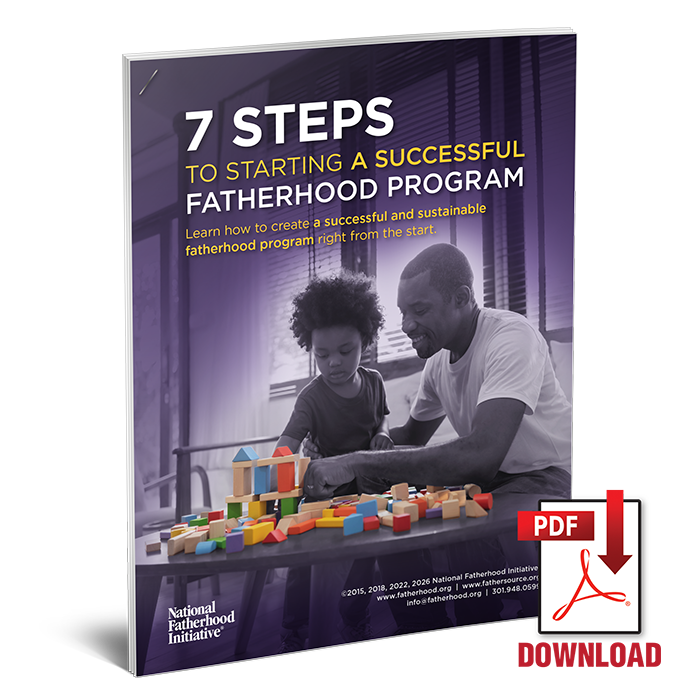
Learn How to Build a Fatherhood Program That Works
Download this free guide for a proven 7-step roadmap—from making the case and securing funding for your program, to launching and measuring real results!

%201%20(1).png?width=148&height=88&name=NFI_logo_blue_left%20(1)%201%20(1).png)


