 FATHERHOOD.ORG
%201.png?width=149&height=82&name=NFI_logo_blue_left%20(1)%201.png)
%201.png?width=119&height=65&name=NFI_logo_blue_left%20(1)%201.png)
%201.png?width=119&height=66&name=NFI_logo_blue_left%20(1)%201.png)
%201.png?width=89&height=49&name=NFI_logo_blue_left%20(1)%201.png)
The $154 Billion Problem Many Communities Are Ignoring — And How to Fix It
3 min read


If the U.S. can spend $154 billion in only one year addressing the effects of father absence, the real question is not whether this is a problem—it’s whether we are addressing it at the right level.
Why Is Investing in Fathers a Smart Strategy?
In 2018 alone, the U.S. government spent $154.2 billion on programs supporting families in father-absent homes. This finding comes from The $154 Billion Man: The Economic Argument for Investing in Fathers, published by National Fatherhood Initiative® and the Center for Policy Research.
That’s more than a statistic. It’s a signal that the systems serving families are carrying a significant and growing cost.
If you work in human services and are not intentionally engaging fathers, this isn’t just interesting data. It’s a clear opportunity to rethink how your organization creates impact.
What Is the Real Cost of Father Absence?
The report analyzed 14 federal assistance programs supporting father-absent households. The $154.2 billion represents a 54.5% increase from roughly $100 billion in 2006 (inflation-adjusted).
The largest cost drivers include Medicaid, SNAP, the Earned Income Tax Credit, and housing assistance.
Importantly, this is a conservative estimate. It excludes several major federal programs, such as child welfare, due to a lack of data on their use by family structure. It also does not include state and local matching funds or indirect costs for the 14 assistance programs measured or separate state- and locally-funded programs supporting father-absent homes, such as healthcare and education.
As a result, this figure represents only a portion of the true economic impact of father absence.
What Does This Mean for Your Work with Families?
If your programs are not intentionally and consistently engaging fathers, you are likely operating downstream, managing the effects of family instability instead of reducing the drivers behind it. The data in the report shows that father absence is associated with higher poverty rates and increased reliance on public assistance, which directly impacts demand for the very services your organization provides.
But here’s the more important reality: even if you are working with fathers, that doesn’t automatically mean you’re maximizing impact.
The question is not whether fathers are included. It’s how intentionally and effectively they are engaged.
Organizations that see stronger outcomes don’t just offer father-specific services—they integrate father engagement across their entire approach. That includes how programs are designed, how staff are trained, how outreach is conducted, and how success is measured.
If fathers are only engaged in isolated programs or as an add-on, the impact will be limited. You may be helping individual dads, but you are not yet influencing system-level outcomes or reducing long-term costs.
On the other hand, if your organization is already prioritizing father engagement in a structured, consistent way, you are positioned not only to serve families but also to reduce demand for services over time.
This is the shift: from including fathers as participants to engaging them as a core strategy to improve outcomes, strengthen families, and reduce the need for intervention.
The Strategic Shift: From Intervention to Prevention
The $154.2 billion reflects the cost of responding after challenges have already taken hold—through healthcare, food assistance, housing support, and other safety-net programs.
For organizations, this creates a clear choice: continue focusing primarily on addressing immediate needs or invest in approaches that reduce the likelihood that those needs will escalate.
Intentionally and proactively including fathers in programs and services as part of a true whole-family approach is one such investment. When fathers are also supported to be positively involved, families are more likely to experience greater economic stability, stronger co-parenting relationships, and improved outcomes for children—factors associated with reduced reliance on public assistance over time.
This does not replace existing services. It strengthens them.
By embedding father inclusion into program design and delivery, organizations can move from reacting to challenges to addressing key drivers behind them.
How Can You Use This Report Immediately?
In funding conversations, lead with the scale of the issue: the U.S. spent $154 billion in one year alone addressing the effects of father absence. This helps reframe father engagement in the economic terms that resonate with many funders.
In program design, focus on areas that influence long-term outcomes, including economic stability, relationship skills, and co-parenting support.
At the organizational level, assess whether your systems are built to intentionally and proactively include and engage fathers as part of a whole-family approach. Use the free Father Friendly Check-Up™ to get a trustworthy assessment of your organization’s level of “father friendliness” and identify gaps and opportunities.
The Bottom Line
Communities are already paying the cost of father absence.
The strategic question is whether your organization will continue responding to that cost or take steps to reduce it.
The data make one thing clear: investing in fathers is both a practical and economically sound strategy for strengthening families and communities.
Download the full report here, and download the report infographic here. You can also watch the recording of The $164 Billion Dollar Man Study Webinar here.
Date Published: 04/14/2026
Last Updated: 04/14/2026
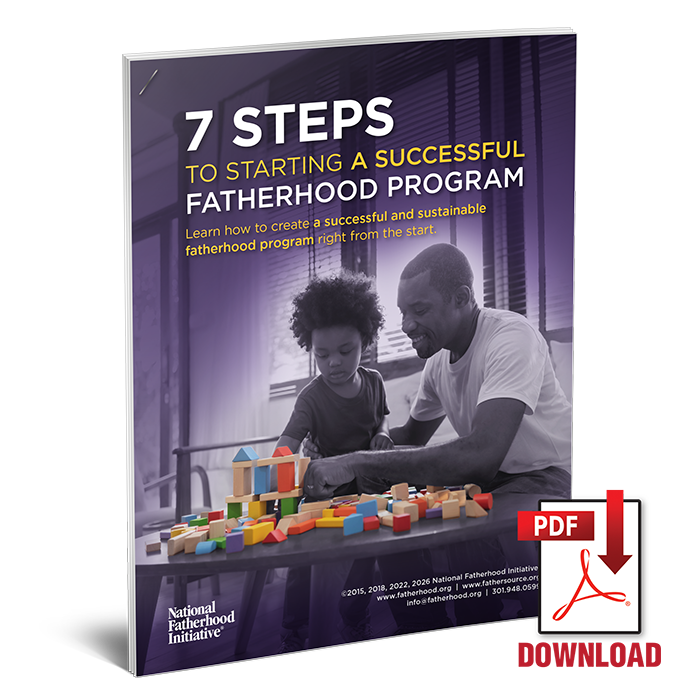
Learn How to Build a Fatherhood Program That Works
Download this free guide for a proven 7-step roadmap—from making the case and securing funding for your program, to launching and measuring real results!

%201%20(1).png?width=148&height=88&name=NFI_logo_blue_left%20(1)%201%20(1).png)


