 FATHERHOOD.ORG
%201.png?width=149&height=82&name=NFI_logo_blue_left%20(1)%201.png)
%201.png?width=119&height=65&name=NFI_logo_blue_left%20(1)%201.png)
%201.png?width=119&height=66&name=NFI_logo_blue_left%20(1)%201.png)
%201.png?width=89&height=49&name=NFI_logo_blue_left%20(1)%201.png)
Five Leadership Practices That Build Father-Inclusive Organizations
4 min read


Creating a father-inclusive organization doesn't happen through a new but isolated fatherhood program, staff training on how to include fathers, or policy change that supports engaging fathers more effectively. While those efforts are helpful, becoming truly father inclusive takes a comprehensive commitment that touches every aspect of your organization, from your leadership and culture to policies, programs, and community partnerships.
That's why National Fatherhood Initiative®'s Father Friendly Check-Up™ (FFCU) uses four categories that combine to comprehensively assess your organization’s readiness to include fathers. This assessment lays the foundation for identifying ways that will help you build a truly father-inclusive organization.
- Leadership Development examines the attitudes, beliefs, values, and priorities of your organizational leaders and how they influence the culture of father inclusion.
- Organizational Development focuses on the policies, procedures, systems, physical environment, and staff practices that either support or hinder father inclusion.
- Program Development evaluates whether your organization's services, programs, and outreach efforts intentionally engage fathers and meet their unique needs.
- Community Engagement measures how effectively your organization collaborates with community partners, stakeholders, and funders to strengthen father involvement throughout the community.
This article is the first in a four-part series, with each article exploring one of these assessment categories in depth. We'll examine why each category matters and offer practical tactics you can implement immediately to become more father inclusive.
We begin where lasting organizational change always starts: leadership.
The attitudes, beliefs, and priorities of executive and management staff shape every policy, program, and client interaction that follows. If leaders genuinely believe fathers matter, that belief becomes part of your organization's culture. If they don't, even the best father-inclusive efforts will struggle to gain traction.
Here are five of the most impactful leadership practices from the FFCU’s Leadership Development category, along with practical ways to apply each one.
1. Great Leaders Examine Themselves First
This category begins by examining whether leadership has assessed its own attitudes, beliefs, and practices regarding supporting fathers and their inclusion in the organization's work.
That’s simple and powerful.
Every leader carries assumptions about fathers. Some are based on research showing how father absence and father involvement affect family outcomes. Others are based on personal history, cultural messages, and client interactions. Left unexamined, those assumptions quietly influence hiring decisions, strategic priorities, funding requests, and staff expectations regarding father inclusion.
One practical way to become more father inclusive is to have leaders ask difficult questions such as:
- Do we automatically think of mothers first when discussing families?
- Do we unintentionally assume fathers are unavailable or uninterested?
- Are we expecting less from fathers than we expect from mothers?
- Have we built systems that unintentionally exclude fathers?
The strongest organizations don't assume they're father inclusive; they regularly assess themselves and remain open to growth in self-awareness regarding their father-inclusive practices.
2. Leadership Must Make the "Why" Crystal Clear
This category focuses on helping staff understand the importance of fathers and ensuring leaders have been trained on the benefits of father inclusion.
This matters because people rarely commit to a new priority unless they understand why it matters.
When leaders consistently communicate that involved fathers improve outcomes for children, mothers, families, and communities, father inclusion becomes more than a siloed program. It becomes woven into the fabric of your organization’s culture.
Staff meetings, onboarding sessions, newsletters, and strategic planning discussions should regularly reinforce messages such as:
- Fathers positively influence children's emotional, cognitive, and behavioral development.
- Father involvement benefits mothers as well as children.
- Children benefit from healthy father involvement regardless of whether fathers live with them.
- Every staff member (not just fatherhood specialists) plays a role in including fathers.
When leaders consistently communicate these messages, staff begin viewing father inclusion as everyone's responsibility.
3. Culture Is Built Through Everyday Language
This category also examines whether leadership displays positive, strengths-based language when discussing fathers with clients.
This seemingly small practice often produces enormous cultural change.
Your organization develops its own internal vocabulary. Staff naturally mirror the language used by its leaders.
If leadership frequently discusses fathers in terms of problems (e.g., "They're hard to reach," "Most of them won't show up," and "We can't count on fathers."), then that mindset gradually becomes part of your organizational culture.
Instead, effective leaders intentionally use strengths-based language (e.g., "How can we remove barriers that prevent fathers from participating?", "What strengths does this father already bring to his family?", and "How can we build on his desire to be involved?"). Notice the difference. One approach assumes fathers are the problem. The other assumes fathers are part of the solution. That shift changes how staff interact with fathers from the very first conversation with them.
4. Father Inclusion Must Be an Organizational Expectation
This category asks whether leadership expects staff to invite and involve fathers whenever parents and families are eligible for services.
Expectation is different from encouragement. Many organizations say they welcome fathers. Far fewer consistently expect staff to engage them.
Leaders can reinforce this expectation by:
- Integrating father inclusion into staff orientation.
- Discussing father participation during supervision meetings.
- Celebrating staff successes in reaching fathers.
- Sharing stories of positive father inclusion during team meetings.
- Integrating father inclusion into performance conversations.
When leadership consistently communicates that father inclusion is part of quality service and not an optional extra, staff begin treating it that way.
5. Sustainable Change Requires Leadership Investment
Perhaps the biggest takeaway from the Leadership Development category is that father inclusion requires intentional investment.
This category asks whether leadership:
- Builds staff capacity to engage fathers.
- Develops fatherhood leaders within the organization.
- Conducts organizational assessments of father friendliness.
- Measures father-friendly outcomes.
- Engages funders and community stakeholders.
- Pursues funding specifically for father-inclusive efforts.
These aren't isolated activities. Together, they create an infrastructure that allows father inclusion to grow. Organizations that make lasting progress don't rely on individual staff passion alone. They build systems that support father inclusion year after year.
Leadership Creates the Culture
Organizations rarely become father inclusive by accident. They do so because leaders intentionally shape a culture where fathers are welcomed, valued, and equipped to succeed. Programs matter. Policies matter. Training matters. But none of them happen without leadership’s commitment and direction.
How would your leadership team describe the role of fathers in child and family well-being? Would everyone give a similar answer?
Have you taken the Father Friendly Check-Up™? If not, allocate one hour within the next week to do so.
Date Published: 07/21/2026
Last Updated: 08/18/2026
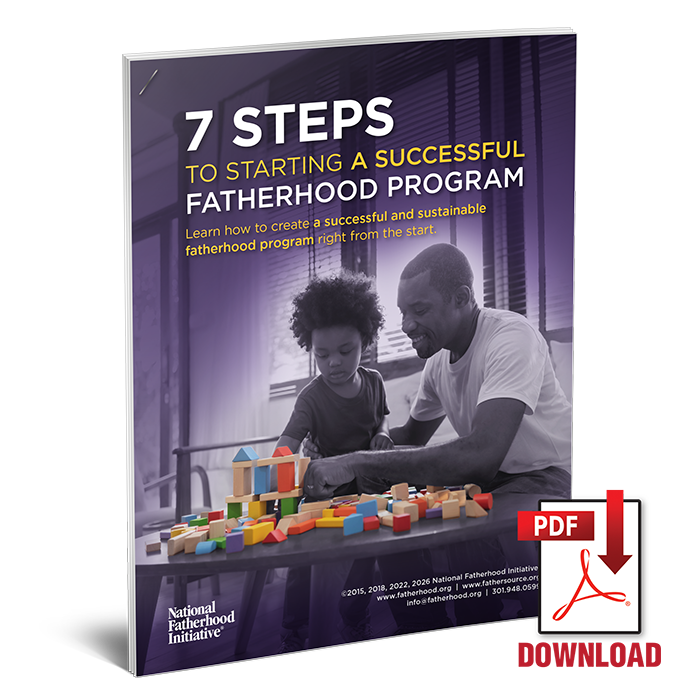
Learn How to Build a Fatherhood Program That Works
Download this free guide for a proven 7-step roadmap—from making the case and securing funding for your program, to launching and measuring real results!

%201%20(1).png?width=148&height=88&name=NFI_logo_blue_left%20(1)%201%20(1).png)


