 FATHERHOOD.ORG
%201.png?width=149&height=82&name=NFI_logo_blue_left%20(1)%201.png)
%201.png?width=119&height=65&name=NFI_logo_blue_left%20(1)%201.png)
%201.png?width=119&height=66&name=NFI_logo_blue_left%20(1)%201.png)
%201.png?width=89&height=49&name=NFI_logo_blue_left%20(1)%201.png)
5 Ways to Build Father Inclusion Into Your Daily Operations
6 min read


How do you move father inclusion from something your organization believes in to something it consistently does every day?
This four-part series explores the four categories of National Fatherhood Initiative®’s Father Friendly Check-Up™ (FFCU) and the role each plays in creating a truly father-inclusive organization. Each article focuses on one category—Leadership Development, Organizational Development, Program Development, and Community Engagement—and offers practical ways to turn a commitment to father inclusion into everyday action.
In the first article in this series, we looked at Leadership Development and the important role leaders play in creating a culture that values and includes fathers.
But a father-inclusive culture can’t live only in your leaders’ attitudes, intentions, and behaviors. It has to show up in the way your organization operates on a daily basis.
That’s where Organizational Development, the second category, comes in.
Organizational Development examines the everyday “nuts and bolts” of your organization: the policies, procedures, processes, physical environment, and staff practices that can either support or hinder father inclusion.
Think about what happens when your organization starts serving a family. Does your intake form ask for the father’s information? Do staff communicate directly with him, even if he doesn’t live with his child? Do the waiting room, brochures, photos, and other materials suggest that fathers belong there? Do staff actively invite him to participate in programs or services, or simply hope someone else will?
An organization’s staff can genuinely believe fathers are important and still operate in an environment that unintentionally excludes them.
Here are five practical ways, drawn from the Organizational Development category of the FFCU, to help your organization become more father inclusive.
1. Put Father Inclusion Into Your Policies and Procedures
There is an important difference between saying “We welcome fathers” and building an organization that consistently includes them. Policies and procedures help close that gap.
The FFCU asks staff to examine whether their organization’s policies and procedures communicate directly with fathers, gather fathers’ contact information, connect fathers with resources, and require fathers’ input on programs that involve them.
Why does this matter? Because without father-inclusive policies and procedures, engaging fathers can depend entirely on individual staff members’ motivation to engage them. One staff member may routinely contact both parents. Another may communicate primarily with the mother. One program may actively invite nonresidential fathers. Another may assume that if a father isn’t living with his child, he isn’t involved. Father inclusion shouldn’t depend on who answers the phone or conducts the intake.
Review your policies and procedures and ask:
- Do they explicitly include fathers?
- Do staff routinely collect contact information for fathers?
- Are nonresidential and noncustodial fathers encouraged to participate?
- Do staff contact fathers directly rather than relying on mothers to relay information?
- Are staff expected to connect fathers with resources that address basic needs?
2. Examine Your Forms—They Send a Message
Sometimes father exclusion is hiding in plain sight.
Pull out your intake forms, applications, questionnaires, and registration materials. What language do they use? A form that asks only for “Mother’s Name” may seem like a small administrative detail. But it sends a message before a staff member ever says a word: We expected Mom. We didn’t necessarily expect Dad.
The FFCU specifically asks whether organizations use gender-neutral client forms that ask about both parents, or the mother and father separately, rather than asking only about the mother. It also examines whether an organization has incorporated father inclusion into its strategic or action plan. That seemingly minor change to a form can have a significant effect. Forms don’t just collect information. They can shape staff behavior. If your intake process asks for information about both parents, staff are more likely to think about both parents. If it asks only about mothers, fathers can become an afterthought. It also shapes the parents’ first impression of an organization.
Conduct a simple father-friendly form audit. Review the forms your staff and clients use most often and ask: Do they communicate that we want to engage the whole family, including fathers?
You may discover that one of the easiest father-friendly improvements your organization can make is already sitting in your filing cabinet, or in an online form.
3. Make “Fathers Are Welcome Here” Visible
Imagine you’re a father entering your facility for the first time. Before anyone says hello, you take a look around. What do you see? Do you see photos of fathers interacting positively with children? Are there resources specifically for fathers? Do brochures and reading materials speak to men? Is there information about activities fathers can do with their children? Or does everything around you communicate that your services are primarily designed for mothers?
The physical environment is so important that the FFCU dedicates an entire section of Organizational Development to it. The assessment asks whether the environment communicates “Fathers are welcome here,” provides father-specific reading materials, displays positive images of fathers, makes father-focused resources easy to find, and provides space for father-child interaction. It even asks whether a diaper-changing station is available to fathers, one of those seemingly small details that can communicate organizational intent.
Try this simple exercise: Walk through your organization as if you were a father visiting for the first time. Start in the parking lot or at the entrance. Walk through reception, the waiting area, hallways, meeting rooms, and restrooms. Ask yourself one question: What tells me this organization expected me to be here? If the answer is “not much,” you have identified an opportunity.
4. Move Staff From Being Father-Friendly to Father-Proactive
Staff can have positive attitudes toward fathers and still unintentionally leave them out. Being willing to serve a father who asks for help is different from proactively engaging him. That distinction matters.
The FFCU asks whether staff proactively interact with mothers and fathers equally, seek fathers’ input on decisions affecting their children, and invite fathers to participate in programs and services for which parents are eligible. It also examines whether staff encourages mothers and fathers to cooperate in raising their children.
Consider the difference between these two approaches:
- Reactive: “Fathers are welcome to participate. If they show up, great!”
- Proactive: “We noticed we don’t have a father’s contact information. Let’s get it so we can invite him to participate!”
The first leaves the door open. The second actively invites fathers through it. Encourage staff to make one simple question part of their routine: “Where is Dad in this?” During intake, case planning, home visiting, service referrals, parent meetings, and other interactions, that question can help staff spot opportunities to engage fathers who might otherwise be overlooked.
5. Give Staff the Skills to Engage Fathers Effectively
Expecting staff to include fathers without preparing them is a recipe for frustration. Father engagement requires skills.
The FFCU examines whether staff understand differences in parenting styles, avoid gender stereotypes, know how to discuss important topics with fathers and mothers, and seek opportunities to learn from peers who successfully serve fathers.
It also places significant emphasis on training. Staff should understand the benefits of involved fathers and how to effectively include fathers in programs and services. The assessment covers training in gender communication, parenting styles, cultural and familial barriers to father involvement, and the personal attitudes, beliefs, biases, and behaviors that affect father inclusion.
For organizations that run fatherhood programs, the FFCU goes further by examining whether staff have been trained in core father-inclusion competencies, such as effective facilitation, recruitment and retention, and the curricula they use.
Don’t view training as a one-time event. Build father inclusion into onboarding. Revisit it during staff development. Discuss challenging father-engagement situations during supervision. Encourage staff to attend webinars, conferences, and other learning opportunities. Make father engagement a skill your organization intentionally develops. Because when staff know why fathers matter and how to engage them effectively, father inclusion becomes far more likely to happen consistently.
Build Father Inclusion Into the System
A father shouldn’t have to encounter the “right” staff member to feel welcomed by your organization. He shouldn’t have to overcome a mother-focused intake form, search for information relevant to him, or repeatedly ask whether he’s allowed to participate. A truly father-inclusive organization removes as many of those obstacles as possible before he ever arrives.
That’s the larger lesson of Organizational Development. Leadership can establish the expectation that fathers matter. But policies, procedures, processes, physical spaces, and well-prepared staff turn that expectation into everyday practice.
Look around your organization and ask: If every employee who is passionate about father inclusion left tomorrow, would our policies, procedures, forms, physical environment, and staff expectations still ensure fathers are included? If the answer is no, where could you begin building father inclusion into your organization’s systems?
Have you taken the Father Friendly Check-Up™? If not, allocate one hour within the next week to do so.
Date Published: 09/15/2026
Last Updated: 09/15/2026
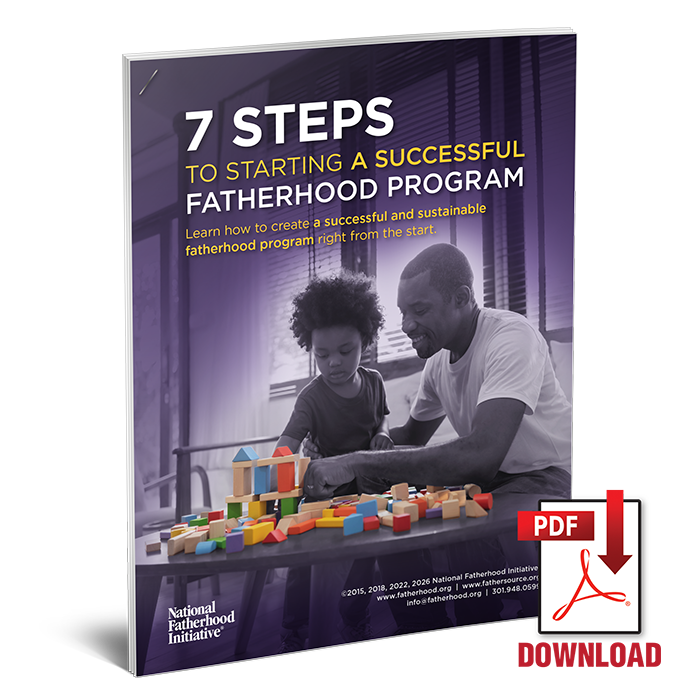
Learn How to Build a Fatherhood Program That Works
Download this free guide for a proven 7-step roadmap—from making the case and securing funding for your program, to launching and measuring real results!

%201%20(1).png?width=148&height=88&name=NFI_logo_blue_left%20(1)%201%20(1).png)


